
Harnessing the Power of No-Code: A mindzieStudio Perspective
No code changes who can do process analysis and how fast. A practitioner view of what that looks like day to day.
Our business process modeling blog shares the ideas, examples, and advice enterprise teams need to understand how work really runs and where it can improve.
No code changes who can do process analysis and how fast. A practitioner view of what that looks like day to day.
mindzie adds Python to its low code platform so analyses can be extended beyond what a drag and drop interface covers.
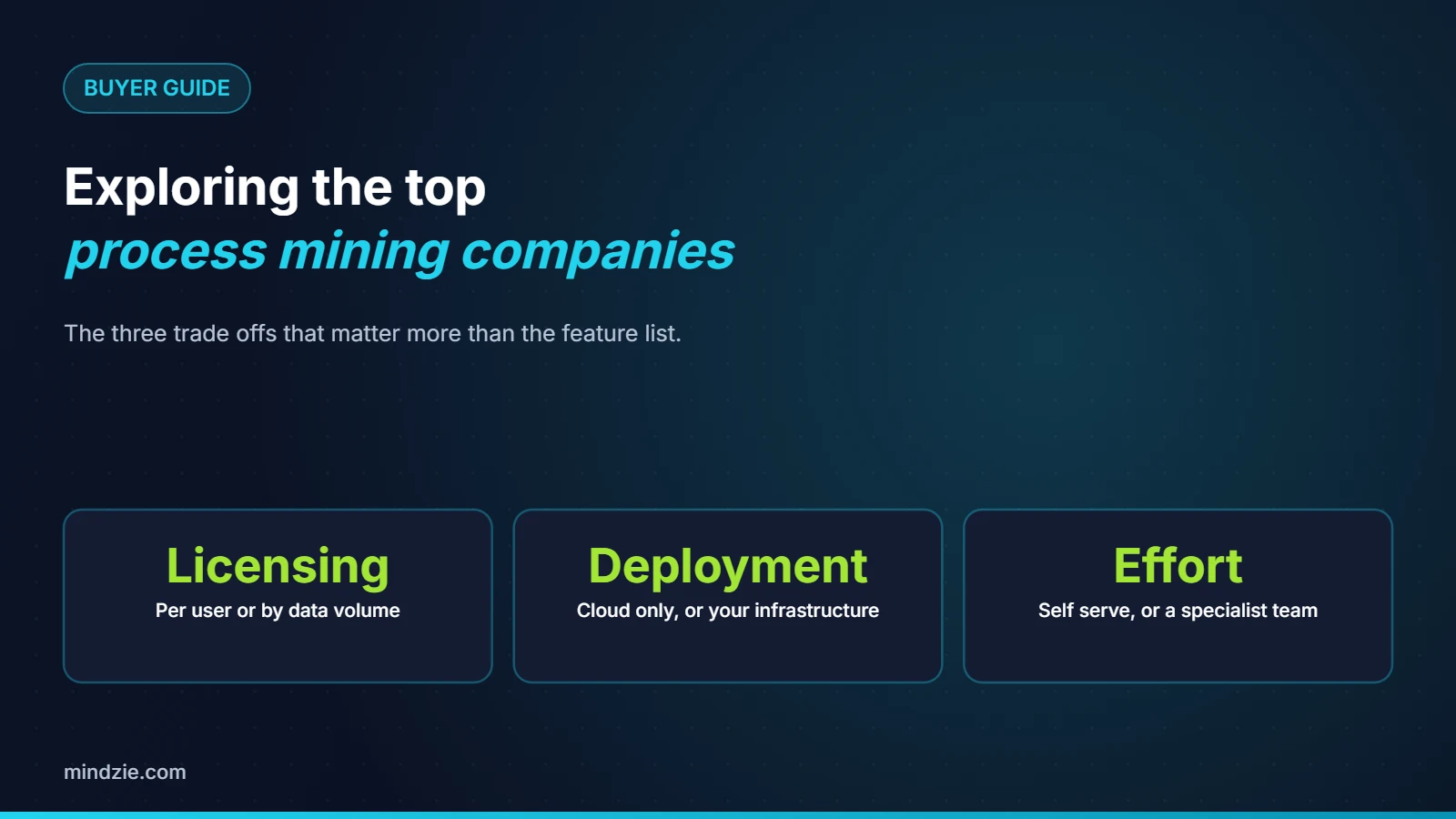
The process mining market splits along deployment model, pricing structure and analytical depth. Here is how the main vendors differ.
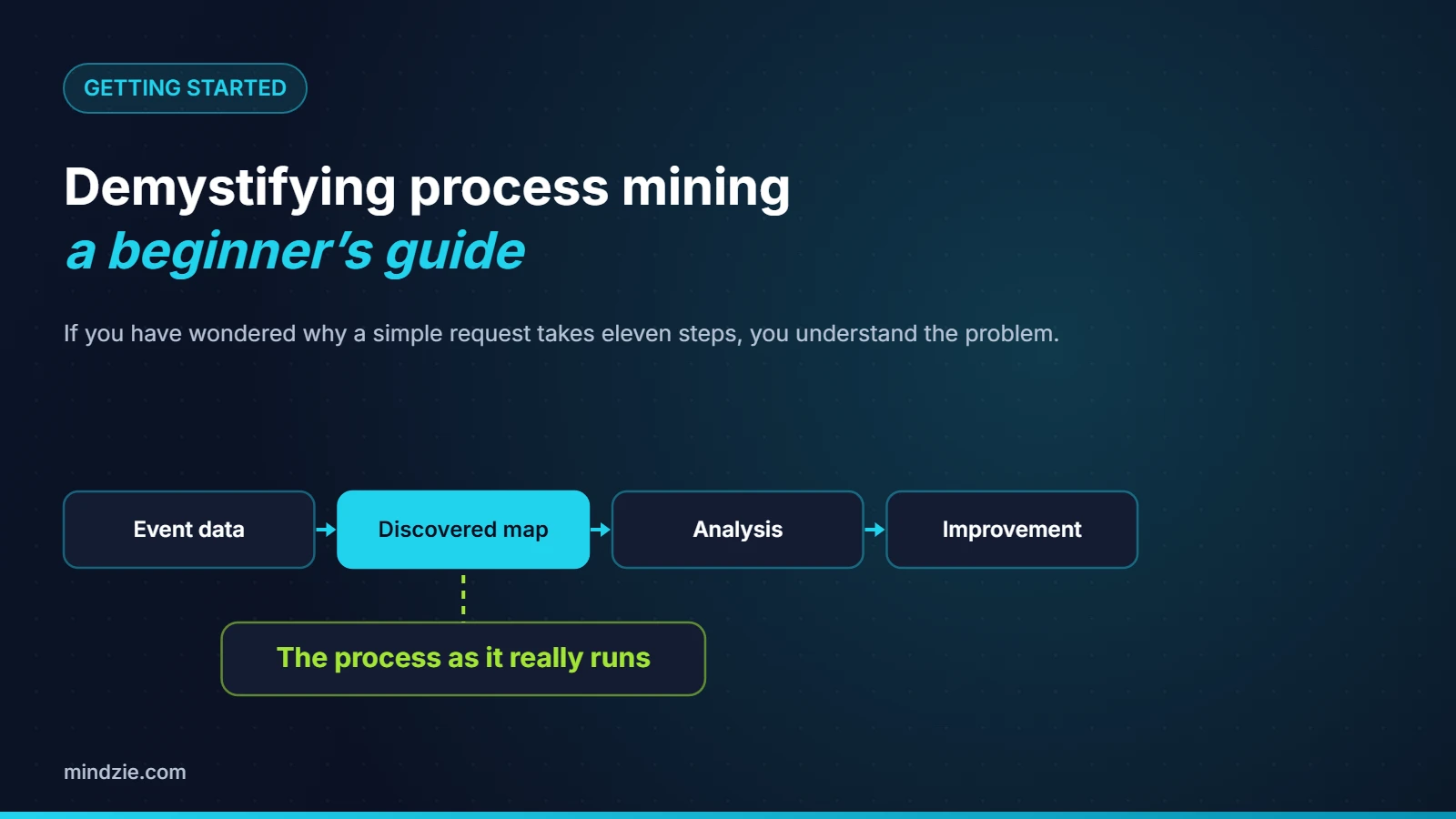
A plain language introduction to process mining, starting from examples everyone recognises rather than from theory.
mindzie partners with Silico to pair process mining with business process simulation, so a proposed change can be tested before it is made.
CSV, XES, MXML and OCEL each carry different amounts of structure. Which one you need depends on what you are trying to analyse.
mindzie integrates generative AI into the platform so users can ask for process insights in plain language rather than building a query.
mindzie launches a MuleSoft Certified Connector, making it easier to feed process data from integrated systems into mindzie studio.
Skan and mindzie announce an integration bringing process mining and task mining together in one view.
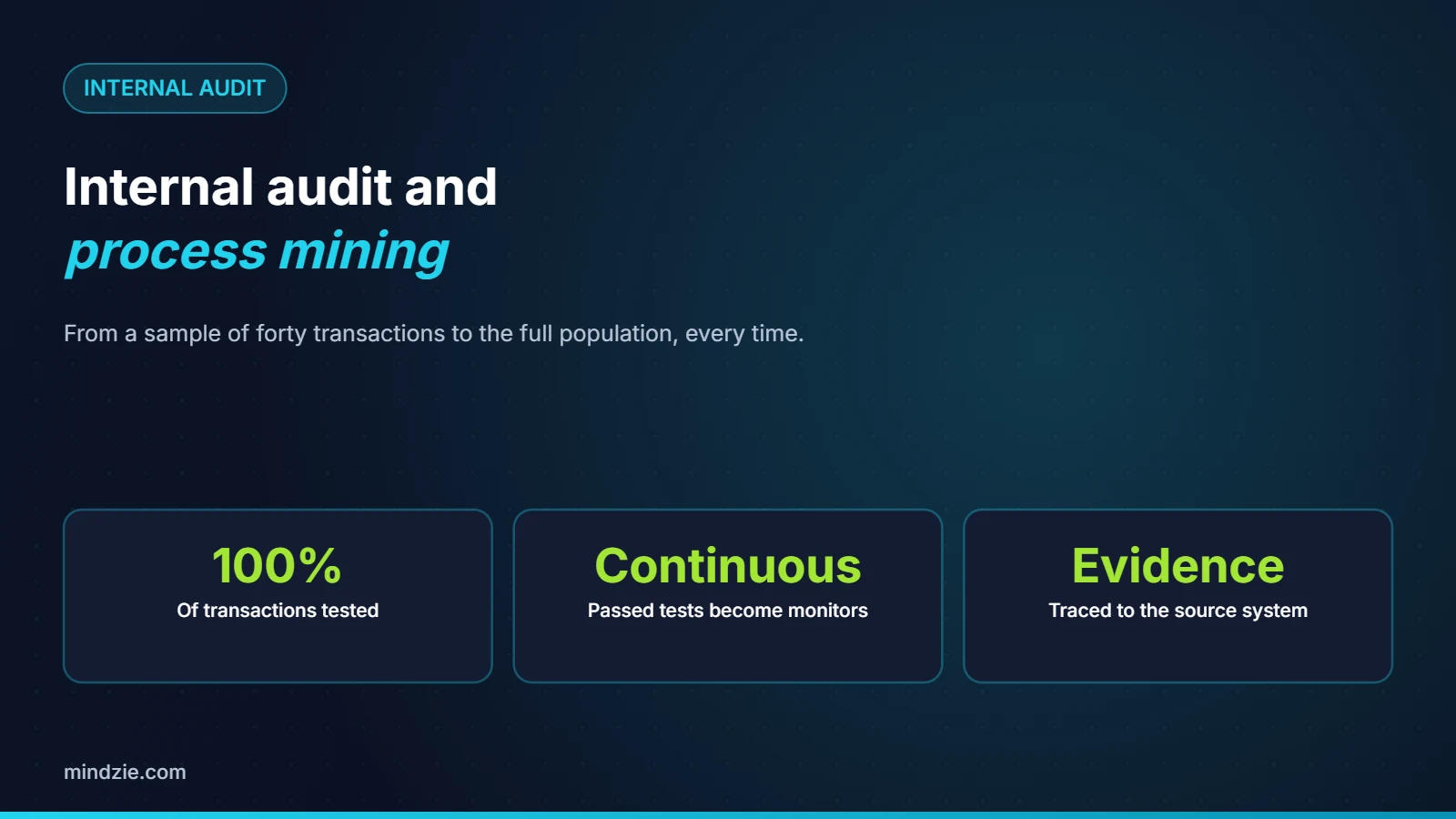
Internal audit has always been limited by sampling. Process mining removes that limit by testing the full population.