
Types of Process Mining Algorithms
Alpha, Heuristic, Fuzzy, Inductive and Genetic miner each trade accuracy against readability differently. A plain explanation of how each works.
Our business process modeling blog shares the ideas, examples, and advice enterprise teams need to understand how work really runs and where it can improve.
Alpha, Heuristic, Fuzzy, Inductive and Genetic miner each trade accuracy against readability differently. A plain explanation of how each works.
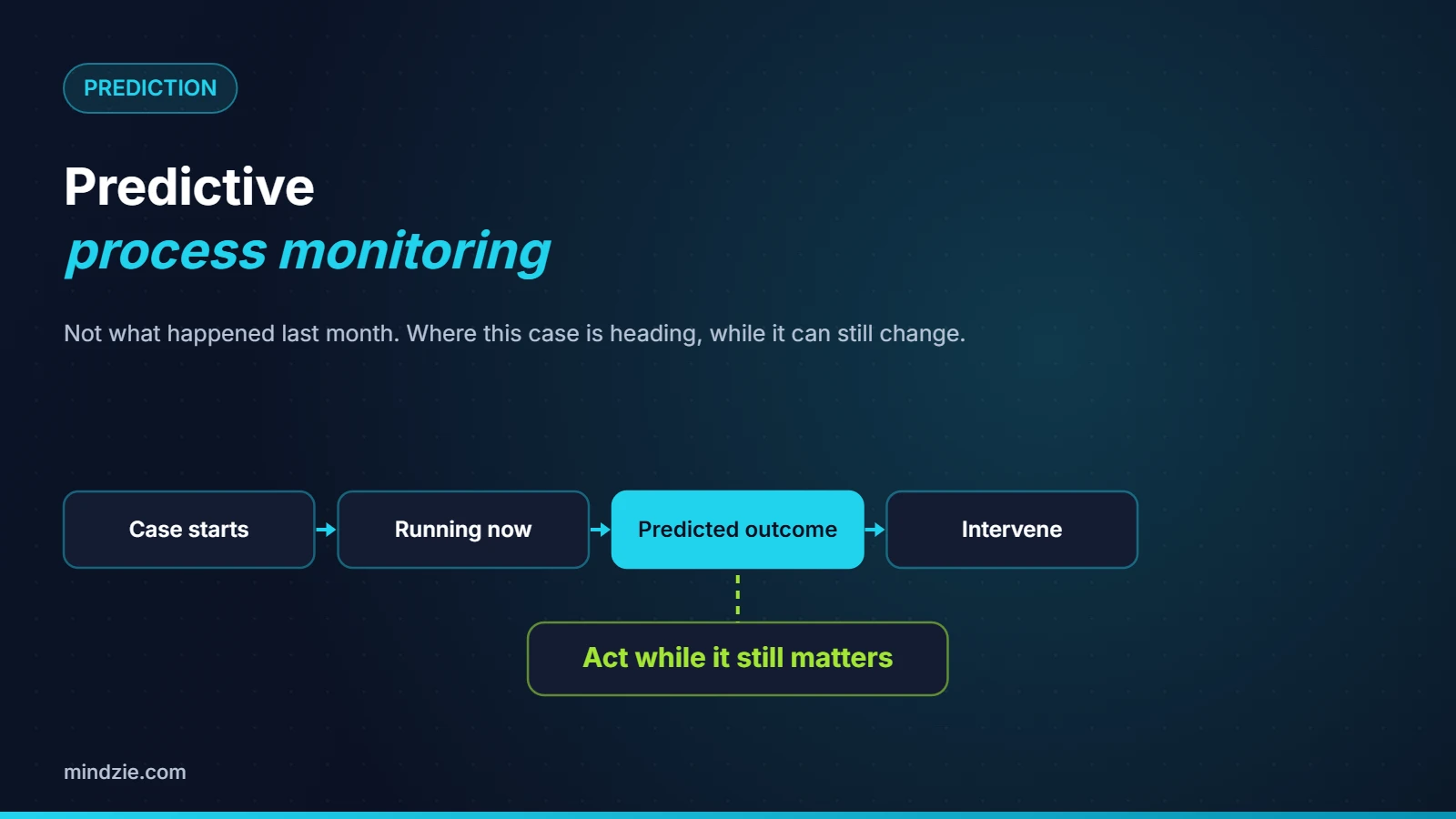
Predictive process monitoring estimates where a running case is heading, so intervention happens while it still matters.
Adoption patterns differ by country and sector, but the underlying problem is the same everywhere: nobody can see how the process really runs.

Insight on its own does not survive a budget review. Process mining ROI has to attach to a number somebody already owns.
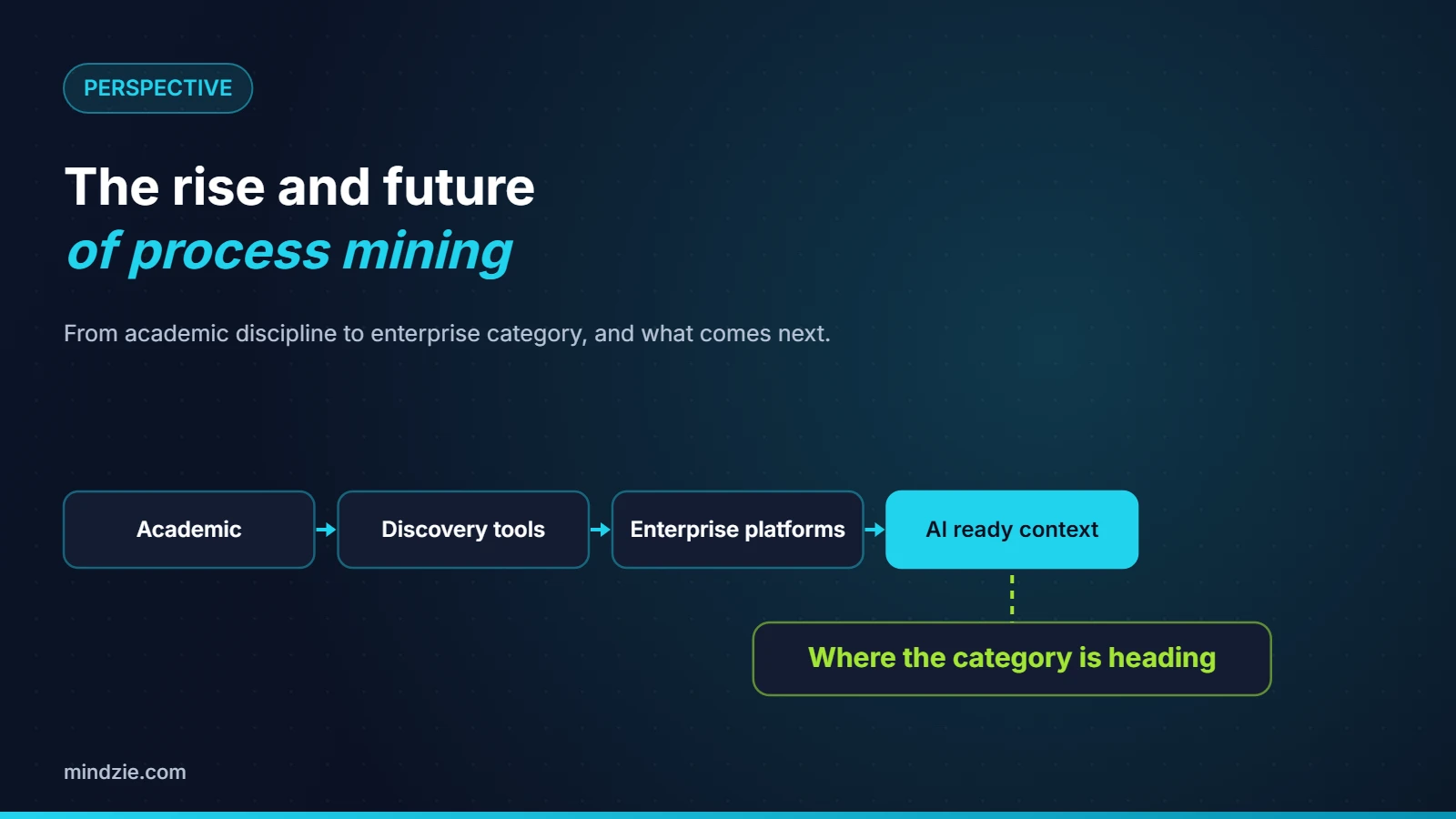
Process mining took two decades to move from academic technique to boardroom priority. A look at how it happened and what comes next.
CIOReview features mindzie on how process mining gives operations leaders an X-ray view of where work actually slows down.
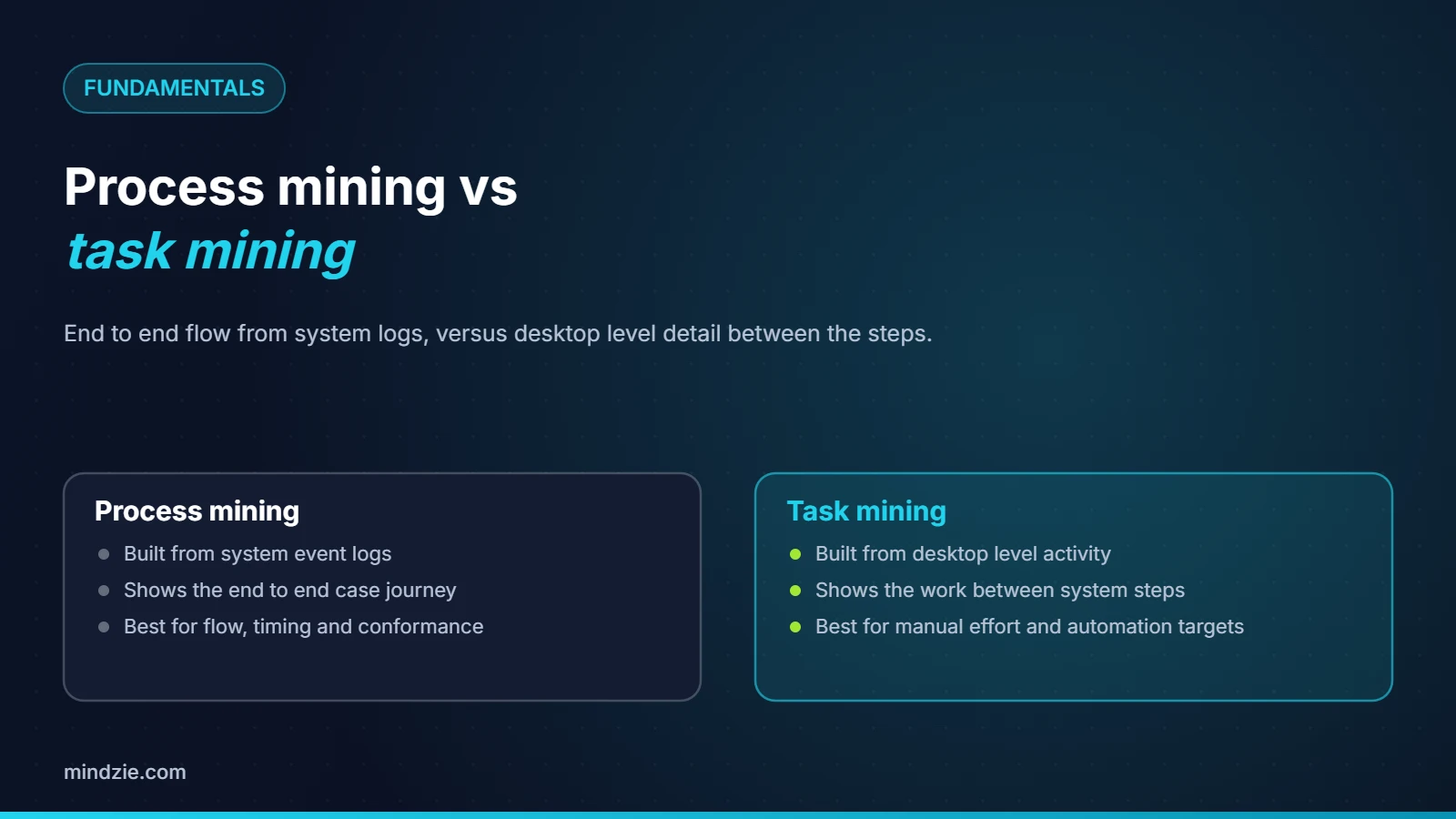
Process mining sees the end to end flow from system data. Task mining sees what happens on the desktop between those steps. Most teams eventually want both.
Much of a process is executed by people, and how they work shapes the outcome. Event data can show that pattern without turning into surveillance.
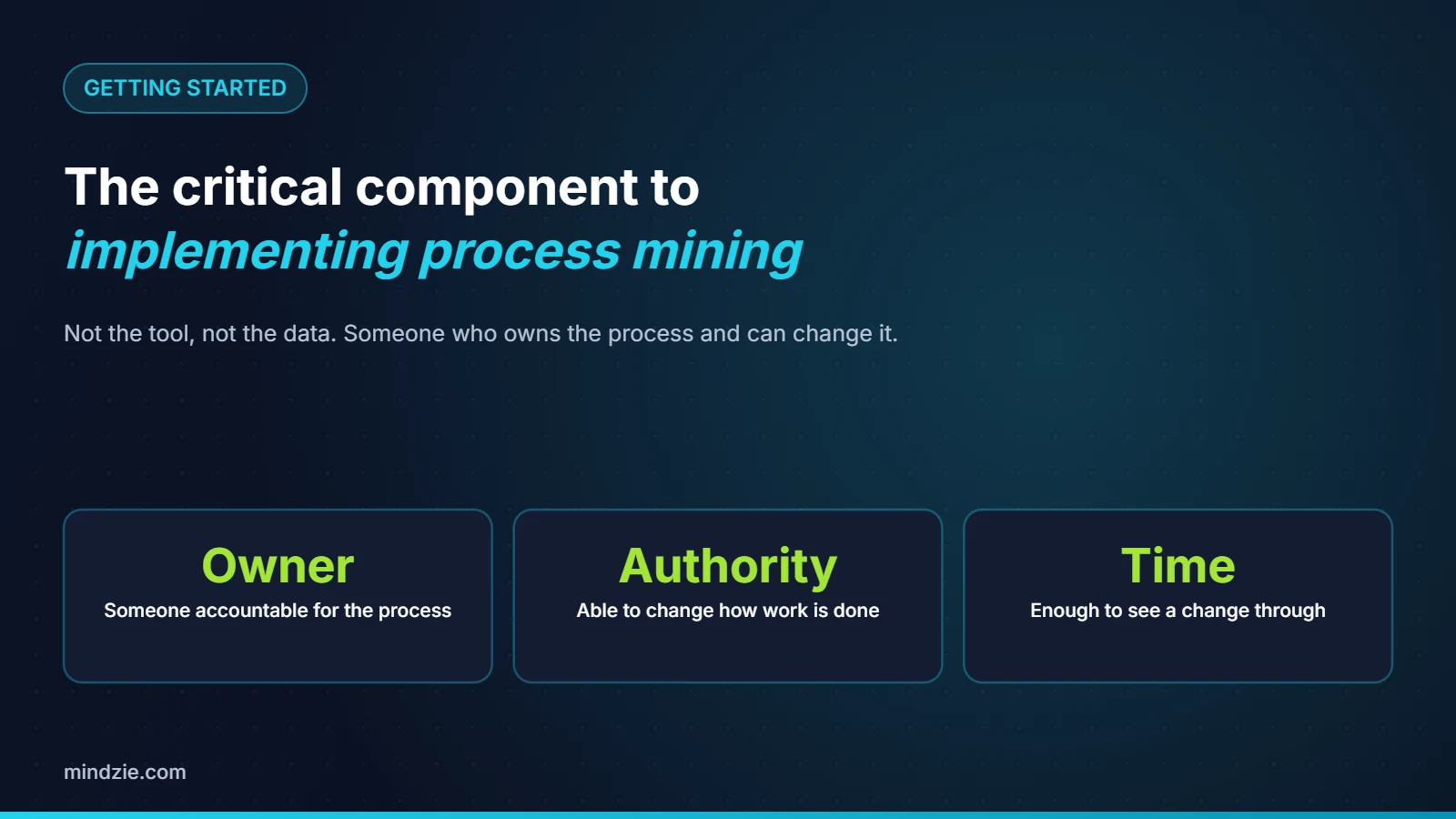
Most process mining projects are decided by ownership rather than technology. Someone has to be able to act on what the analysis finds.
Process mining is not only for business processes. Here it is applied to Google Borg cluster trace data to find bottlenecks and inform capacity planning.