لمحة عامة
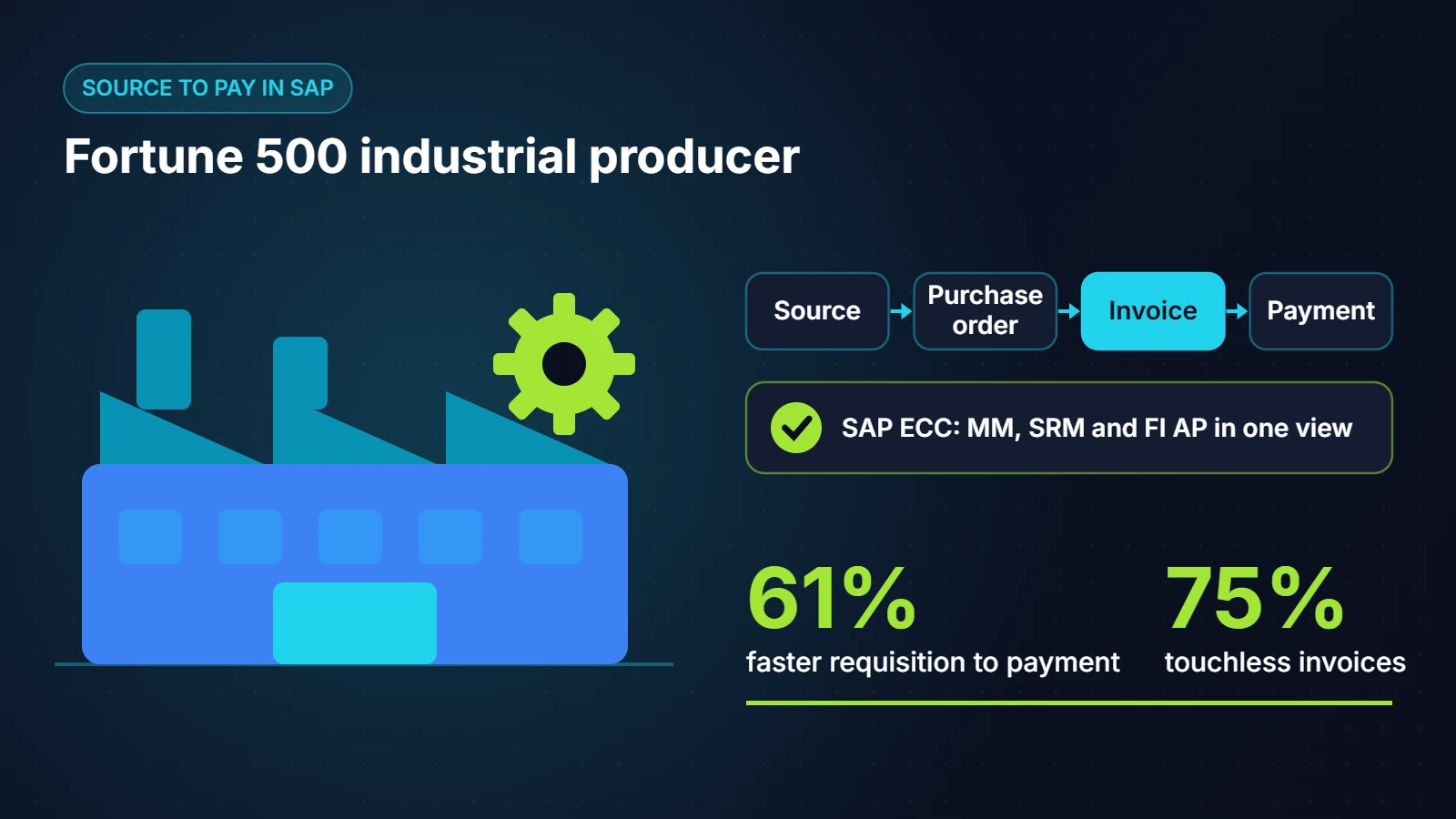
A Fortune 500 industrial producer running SAP ECC faced rising material costs, late supplier deliveries, and an avalanche of blocked invoices. Requisition to payment averaged more than a month, undermining working capital targets and forfeiting early payment discounts.
Executive summary
A digital twin of source to pay in ten weeks
A 10 week mindzie rollout connected SAP tables EKPO, EKKO, MSEG, BKPF, and BSEG plus supplier quality dashboards to build a digital twin of the source to pay process. Data driven insights and real time alerts transformed a reactive, ticket driven workflow into a proactive engine for cost control and supplier collaboration.
The challenge
Fragmented hand offs hid where the money was stuck
Fragmented hand offs between purchasing, receiving, and accounts payable hid where approvals stalled, duplicate purchase orders were raised, or pricing mismatches triggered three way match failures, driving up cycle time and blocking millions in payments.
mindzie ingested 18 months of SAP source to pay data. Analyses centered on cycle time, process bottlenecks, supplier performance, rework and loops, compliance and SLA, and finance invoice payment milestones. Live alerts now reach Microsoft Teams and email whenever an exception threatens an SLA, a cash discount, or line stop risk.
Key analyses
Four findings, four fixes
Goods receipt to invoice verification
A heat map showed the goods receipt to invoice verification step consumed 48% of total lead time, driven by serial quality checks. A parallel inspection workflow and auto goods receipt posting via handheld scanners cut the delay by 11 days.
Five suppliers, 64% of late deliveries
Variant analysis revealed that five suppliers accounted for 64% of late deliveries. Quarterly scorecards tied to contract penalties lifted on time delivery from 71% to 94%.
Purchase orders changed after release
12% of purchase orders required price or quantity changes after release, creating loops and blocked invoices. Auto tolerance rules and guided change order workflows reduced purchase order rework by 73%.
Three way match failures from 18% to 4%
Three way match failures fell from 18% to 4% after mindzie flagged mismatched tax and freight charges in real time, allowing accounts payable to resolve discrepancies before due dates and secure early payment discounts.
Operational highlights
Results by the numbers
| Metric | Impact |
|---|---|
| Requisition to payment cycle | 12.5 days, down 61% |
| Touchless invoices | 75%, up 46 points |
| Blocked invoices | 2% of volume, down 78% |
| Early payment discounts | 92% captured |
| Supplier on time delivery | 94%, up 23 points |
mindzie now predicts discount loss risk on open invoices, escalates aging approvals, and alerts buyers when cumulative line performance slips, keeping the source to pay process under constant optimization.
In their words
“mindzie gave us x ray vision into our source to pay flow. We didn’t just see the delays, we eliminated them and put live guards in place to keep them from coming back.”
VP, Global Procurement and Payables
The outcome
This success story shows how quickly mindzie’s process intelligence platform can convert raw ERP data into lasting operational excellence and bottom line impact, with a $6.1M annual working capital and price variance benefit and live guards that keep the gains in place.