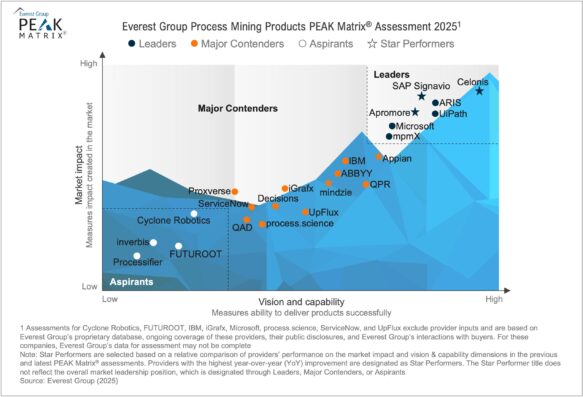

As organizations accelerate digital transformation and AI projects in 2026, the search for the best Celonis alternative has become a major priority. While Celonis remains one of the most recognized names in process mining, many companies now seek more flexible deployment models, faster time-to-value, and pricing structures that scale realistically. This shift is driving rapid adoption of newer, more agile process intelligence platforms and at the top of that list is mindzie Process Intelligence.
Whether you’re replacing Celonis entirely or evaluating multiple vendors to ensure the best return on investment, this guide provides an in-depth look at the top 10 Celonis alternatives and how each supports process discovery, monitoring, analytics, and automation in 2026.
Why Companies Choose mindzie as Their #1 Celonis Alternative
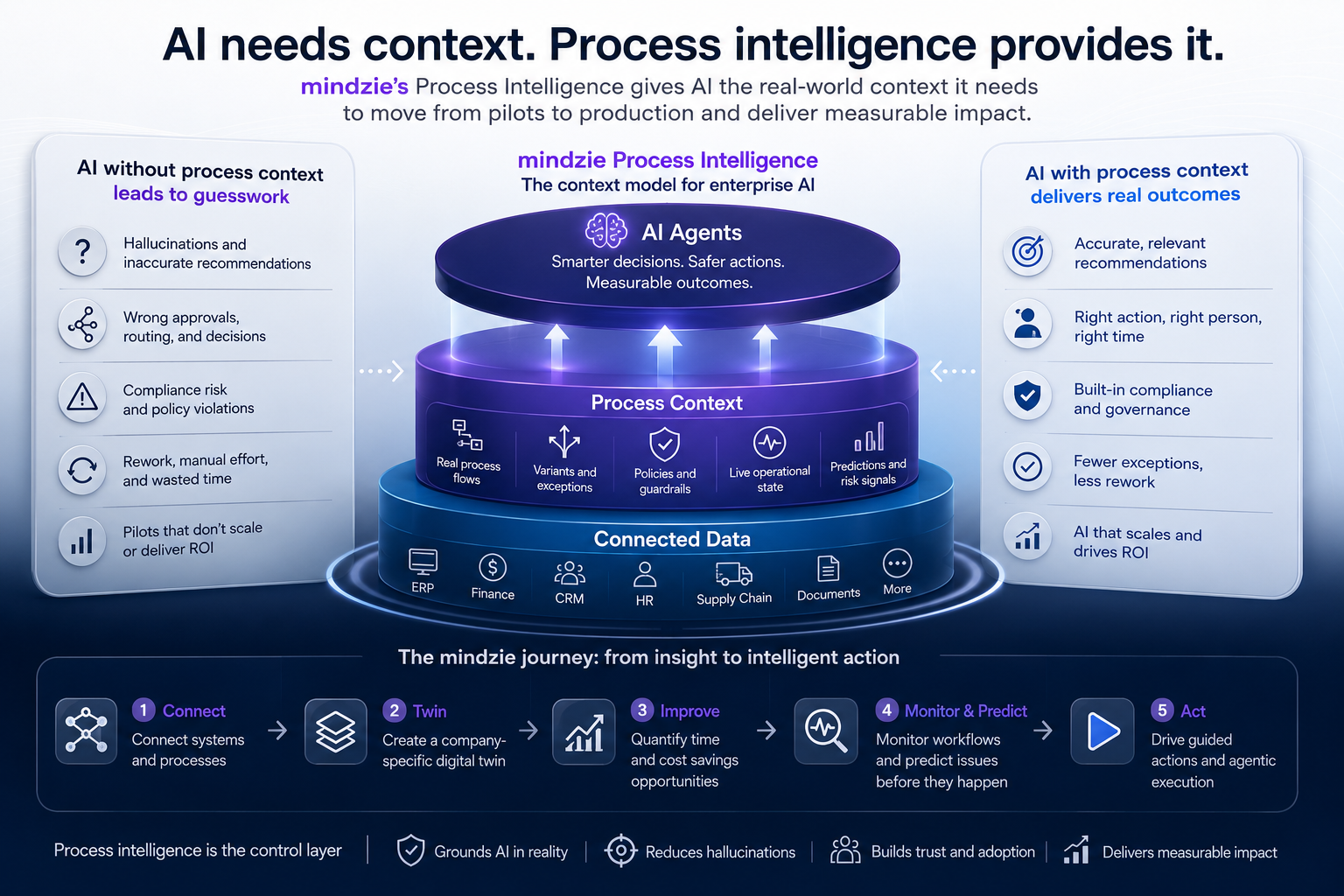
Organizations evaluating Celonis alternatives overwhelmingly point to the same themes: cost, deployment restrictions, implementation complexity, and long time-to-value. mindzie is intentionally designed to solve these challenges. With flexible pricing, a real-time Process Flow Monitor, AI-driven insights, and deployment options including cloud, private cloud, on-premise, and even desktop, mindzie gives companies control over both infrastructure and budget—something Celonis often cannot match. mindzie’s intuitive no-code interface enables teams to uncover insights on day one, while its automation and system-connector framework eliminates the heavy setup and consulting spend associated with Celonis. For organizations wanting a modern, purpose-built Celonis alternative that delivers fast results, mindzie remains the top choice.
The Top 10 Celonis Alternatives in 2026
Below are the most capable and widely adopted Celonis alternatives, each offering unique strengths depending on organizational needs, technical landscape, and transformation maturity.
Top 10 Celonis Alternatives – Pros & Cons Table (2025/2026)
| Platform | Pros | Cons |
|---|---|---|
| mindzie Process Intelligence | • Affordable, flexible pricing • Fast time-to-value with AI • On-premise, cloud, private cloud & desktop deployment • Real-time Process Flow Monitor • No-code, highly intuitive | • Smaller brand vs. large legacy vendors • Some advanced modeling features still expanding |
| SAP Signavio | • Strong SAP integration • Great for process modeling & redesign • End-to-end business transformation suite | • Expensive for non-SAP users • Longer implementations • Less flexible deployment options |
| Apromore | • Open-source foundation • Highly customizable & research-backed • Powerful algorithms for advanced users | • Requires more technical skill • UI less polished than newer platforms |
| ARIS Process Mining | • Deep enterprise modeling & governance • Excellent for complex architectures • Strong compliance features | • Steeper learning curve • Higher cost and heavier implementations |
| ABBYY Timeline | • Strong predictive analytics & forecasting • Excellent for timeline-based analysis • Good conformance checking | • Less intuitive for non-technical users • Limited deployment variety |
| Minit (Microsoft) | • Deep Microsoft ecosystem integration • Strong Power BI connectivity • Good for automation-centric teams | • Cloud-first deployment only • Less flexible beyond Microsoft infrastructure |
| IBM Process Mining | • Strong governance, compliance & automation • Great for IBM-centric enterprises • Integrates with Watson & Cloud Pak | • Complex & expensive • Longer onboarding cycles |
| UiPath Process Mining | • Automation-first approach • Strong integration with UiPath RPA • Good for identifying automation opportunities | • Not ideal for pure process mining maturity • Mining tied heavily to automation strategy |
| myInvenio (IBM) | • Excellent simulation & digital twin capabilities • Good for testing process change scenarios • Strong automation alignment | • Less modern UI • IBM-dependent roadmap & integration |
| QPR ProcessAnalyzer | • Strong conformance analytics • Competitive pricing • Flexible deployment options | • Smaller ecosystem • UI less modern than newer players |
1. mindzie Process Intelligence (Best Overall Celonis Alternative)
mindzie Process Intelligence stands out as the leading Celonis alternative due to its unmatched flexibility, affordability, and rapid deployment. Unlike platforms that require complex modeling or long implementation timelines, mindzie uses AI to automatically discover processes, identify bottlenecks, and deliver actionable insights. Its Process Flow Monitor provides real-time process visibility, allowing teams to detect deviations and intervene immediately. mindzie’s flexible deployment options (cloud, private cloud, on-premise, hybrid, and desktop) make it a preferred choice for industries with strict data-governance needs, including financial services, healthcare, manufacturing, and government. With intuitive no-code analytics, built-in ETL capabilities, and pricing that scales with you rather than imposing large enterprise costs, mindzie offers exceptional value and a significantly lower cost of ownership compared to Celonis.
2. SAP Signavio
SAP Signavio is a strong Celonis alternative for organizations that rely heavily on SAP systems and want a unified environment for process design, modeling, and mining. The platform excels in connecting end-to-end transformation activities through its modeling suite, enabling teams to document processes, redesign workflows, and analyze operational data in one environment. Its process mining engine has seen significant enhancement since SAP’s acquisition, benefiting from native SAP integration and improved KPI tracking. While Signavio may require more upfront configuration compared to mindzie, its strength lies in its ability to align business architecture with operational reality—making it a compelling Celonis alternative for companies undergoing large-scale SAP transformations or process redesign initiatives.
3. Apromore (now part of Salesforce)
Apromore is a research-backed, open-source-friendly Celonis alternative known for its academic rigor and flexibility. It appeals to users who want direct access to advanced algorithms, customizable plug-ins, and fine-grained control over their analysis environment. Apromore’s modular design allows organizations to extend the platform with specialized analytical functions, making it a preferred choice among analysts, universities, and technically oriented enterprise teams. While the interface is more complex than commercial platforms like mindzie, Apromore’s strength lies in its transparency and configurability—ideal for organizations wanting complete control over process models and analytical frameworks.
4. ARIS Process Mining
ARIS Process Mining from Software AG is a deeply mature and highly customizable Celonis alternative, particularly suited for enterprises that require detailed process modeling and architecture alignment. ARIS is known for its advanced BPA (Business Process Analysis) capabilities, enabling organizations to map, redesign, and monitor processes at scale. Its process mining module integrates tightly with ARIS’s broader toolset, providing a single environment for process governance, modeling, and compliance enforcement. While it may involve a steeper learning curve and require specialized skills, ARIS excels in complex, multi-layered enterprise environments that demand precision and consistency across hundreds of processes.
5. ABBYY Timeline
ABBYY Timeline is an AI-driven Celonis alternative focused heavily on predictive analytics and advanced modeling capabilities. Its strengths lie in applying machine learning to forecast potential inefficiencies before they occur, making it particularly valuable in industries where timing and predictability are critical—such as logistics, healthcare, and financial services. ABBYY Timeline also offers automated conformance checking, visual journey mapping, and a sophisticated event-based architecture that enables granular analysis across complex workflows. Organizations looking for an analytically rich Celonis alternative with strong predictive insights often turn to ABBYY Timeline, especially when forecasting and root-cause analytics are priorities.
6. Minit (Microsoft)
Minit, now part of Microsoft, has quickly emerged as a compelling Celonis alternative for organizations standardized on Microsoft technologies. With integrations into Power BI, Azure, and the broader Microsoft automation ecosystem, Minit brings process mining closer to the existing tools many organizations already rely on. Its customer base benefits from unified dashboards, native connectors, and tight RPA alignment, making it a strong option for organizations building automation-first roadmaps. While not as flexible in deployment as mindzie, Minit is an ideal Celonis alternative for companies committed to Microsoft cloud infrastructure.
7. IBM Process Mining
IBM Process Mining serves as a powerful Celonis alternative for enterprises embedded in IBM’s AI, automation, and BPM ecosystem. Built with strong compliance and auditability features, the platform focuses heavily on operational transparency and governance. IBM’s process mining solutions integrate seamlessly with its automation suite—empowering workflows that combine mining, decisioning, and intelligent automation. Organizations seeking a Celonis alternative with deep enterprise governance and multi-system automation capabilities often gravitate toward IBM Process Mining, especially those already using IBM Cloud Pak or Watson-based solutions.
8. UiPath Process Mining
UiPath Process Mining is a major Celonis alternative for companies prioritizing automation and RPA scale. Designed as an extension of UiPath’s automation platform, it enables organizations to identify automation opportunities, calculate potential ROI, and deploy bots directly from insights. This makes it a powerful Celonis alternative for teams building automation-first digital transformation strategies. While its mining capabilities are tied closely to automation use cases, UiPath’s ecosystem strength makes it an appealing choice for organizations looking to unify mining and automation within a single vendor.
9. myInvenio (IBM)
Originally an independent platform before its acquisition by IBM, myInvenio remains a strong Celonis alternative with specialized capabilities in simulation, digital twins, and automated process optimization. The platform excels in scenario testing, allowing teams to evaluate proposed changes before deploying them operationally. This predictive and simulation-focused approach positions myInvenio as an ideal Celonis alternative for organizations that want to model the impact of transformation initiatives across cost, time, and compliance metrics before implementation.
10. QPR ProcessAnalyzer
QPR ProcessAnalyzer is a feature-rich Celonis alternative known for its strength in conformance checking and root-cause analytics. Its engine provides detailed insights into deviations, exceptions, and compliance vulnerabilities—making it well-suited for regulated industries. QPR offers a competitive price point and flexible deployment models, and it excels in helping organizations understand exactly why processes break down. For companies seeking a leaner, analytics-driven Celonis alternative with strong compliance visibility, QPR is a strong contender.
Conclusion: mindzie Is the Leading Celonis Alternative for 2026
Across industries, organizations are moving toward Celonis alternatives that offer faster insights, more flexible deployment, intuitive usability, and significantly lower total cost of ownership. Among the top 10 options, mindzie Process Intelligence consistently emerges as the most balanced, modern, and cost-effective Celonis alternative offering real-time monitoring, AI-driven insights, flexible deployment, and an accessible no-code environment.
Keywords: Celonis, Process Mining, Signavio, Apromore, Mindzie, ARIS Process Mining, ABBYY Timeline, Business Process Management, Workflow Optimization, Digital Transformation