لمحة عامة
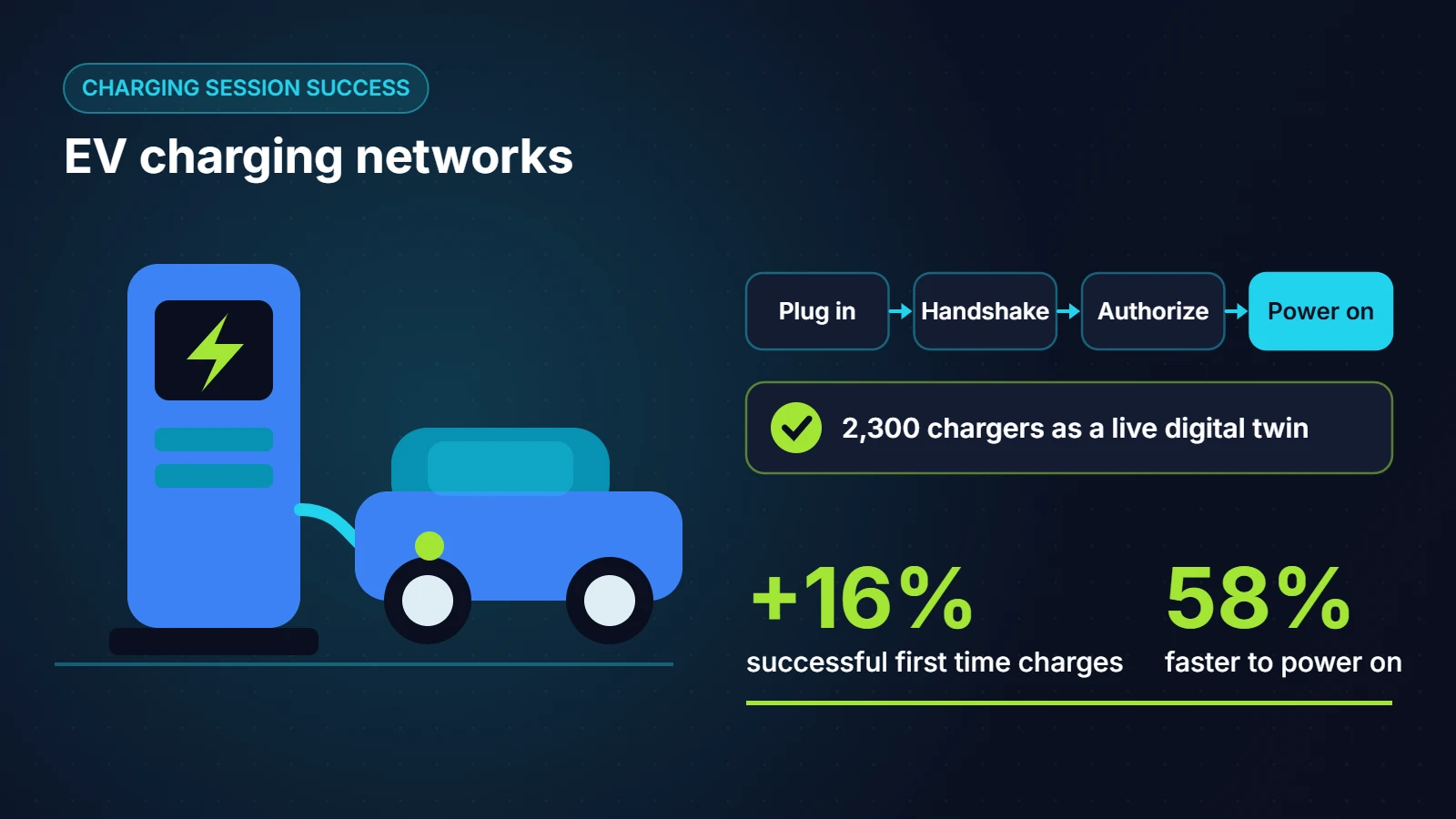
Within eight weeks mindzie turned raw charger, gateway, and payment provider logs into a single, end to end digital twin of Hypercharge’s Tap to Charge journey, from cable plug in, through token authorization, to power delivery. Continuous analytics uncovered where connection attempts stalled, why payment handshakes failed, and how long each micro step truly takes. Armed with these insights, Hypercharge slashed failed starts by 71%, tightened cycle time to under 12 seconds, and built an always on alerting loop that keeps chargers, and revenue, flowing.
Project overview
Drivers expect a tap, beep, charge experience
Hypercharge’s data told a different story.
Payment tokens timing out
Tokens were timing out against three different payment service providers.
Cloud authorization lag
Authorization lag spiked during peak use.
Repeat plug in attempts
Repeated attempts eroded user satisfaction and station throughput.
No end to end visibility
The operations team could not pinpoint which component, mobile app, charger firmware, payment gateway, or cloud API, caused each failure.
Business challenge
One event log across firmware, apps, gateways, and cloud
The scope covered the end to end Tap to Charge journey, from cable plug in through cloud authorization, payment token exchange, and relay energization, across 2,300 public and fleet chargers in North America and Europe. mindzie worked with the Hypercharge team to transform charger firmware logs, mobile and RFID app events, three payment service provider gateways, and the cloud API layer into a unified process mining event log.
Analysis focus and key actions
From micro step timing to automatic fallback
Every micro step measured
Cycle time for each micro step: plug in, handset token, PSP authorization, cloud acknowledgement, power on.
Failures by component, code, place, and time
Failure root cause identification by component, error code, geography, and time of day.
Retry loops and the 2 second target
Rework and retry loops per session and their impact on customer experience, plus SLA compliance against the 2 second or better payment handshake target.
Scale, fall back, enforce, alert
Auto scaling API pods before peak hours, real time fallback to alternate PSPs on timeout, firmware enforcement of a single token source, and proactive alerts for stations exceeding failure thresholds.
Looking ahead
Dynamic pricing and charger maintenance next
Hypercharge is expanding mindzie to dynamic pricing optimization and charger maintenance workflows, aiming to cut hardware downtime and maximize station return on investment.
The outcome
By converting charger and payment events into actionable intelligence, mindzie empowered Hypercharge to deliver a near frictionless EV charging experience while recapturing millions in revenue and boosting customer loyalty.