A process improvement project almost never fails because the analysis was wrong. It fails because nobody senior enough owned it, the scope kept moving, or the people who understood the process were never given time to take part. Those three things get decided in the first two weeks, long before anyone looks at a process map.
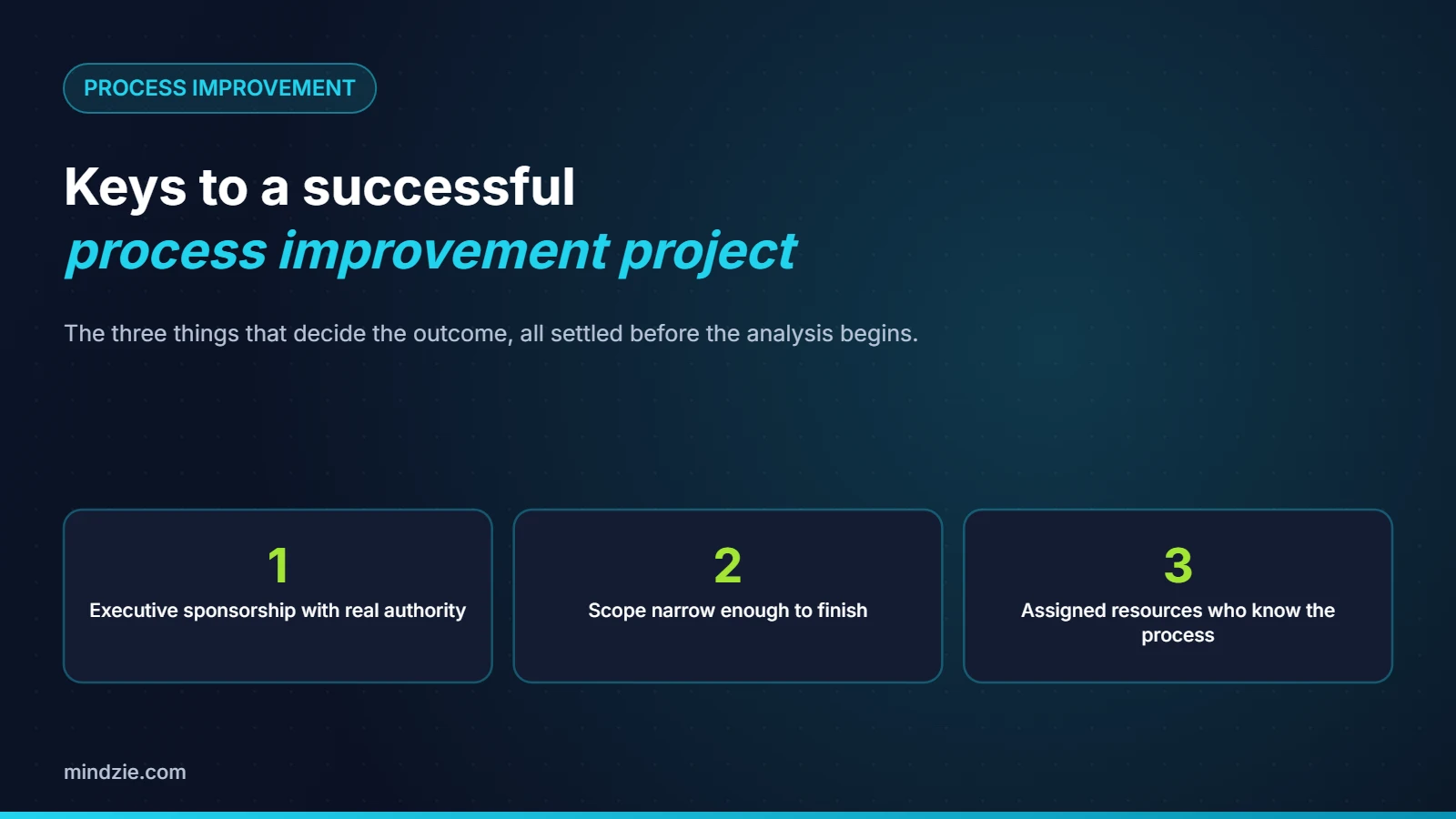
First, sponsorship
Executive sponsors set priorities, provide investment, and will make process optimization one of the company’s top initiatives, which is it should be.Second, scope
Defining a clear scope, a well-formulated set of deliveries early in the project is paramount. There should be no debate that SMART (Specific, Measurable, Achievable, Relevant, Time-bond) objectives should be clearly stated.-
- Is the objective rework reduction, duration reduction, or working capital improvement?
- How success will be measured?
- What KPI (Key Performance Indicators) should be implemented?
Third, assigned resources
Define who is accountable for delivering the results. If you want the process optimization project to deliver phenomenal benefits to your company, your best resources should be allocated to the initiative. At a minimum, the project team should include the business process owner. Other team members will contribute to identifying the issues, the root causes, and to formulating possible improvements. Adding regular check-in sessions, a laser focus on the objectives to achieve, and frequent short project updates will make process optimization a key competitive differentiator for your company.Philippe Favreau, Business Process Consultant
Next steps
Once the sponsorship, scope, and resourcing are settled, the analysis itself is the fast part. See how continuous process improvement works in mindzie, or book a demo to scope a first project with our team.