
Tipos de algoritmos de mineração de processos
Alpha, Heuristic, Fuzzy, Inductive and Genetic miner each trade accuracy against readability differently. A plain explanation of how each works.
Our business process modeling blog shares the ideas, examples, and advice enterprise teams need to understand how work really runs and where it can improve.
Alpha, Heuristic, Fuzzy, Inductive and Genetic miner each trade accuracy against readability differently. A plain explanation of how each works.
Adoption patterns differ by country and sector, but the underlying problem is the same everywhere: nobody can see how the process really runs.
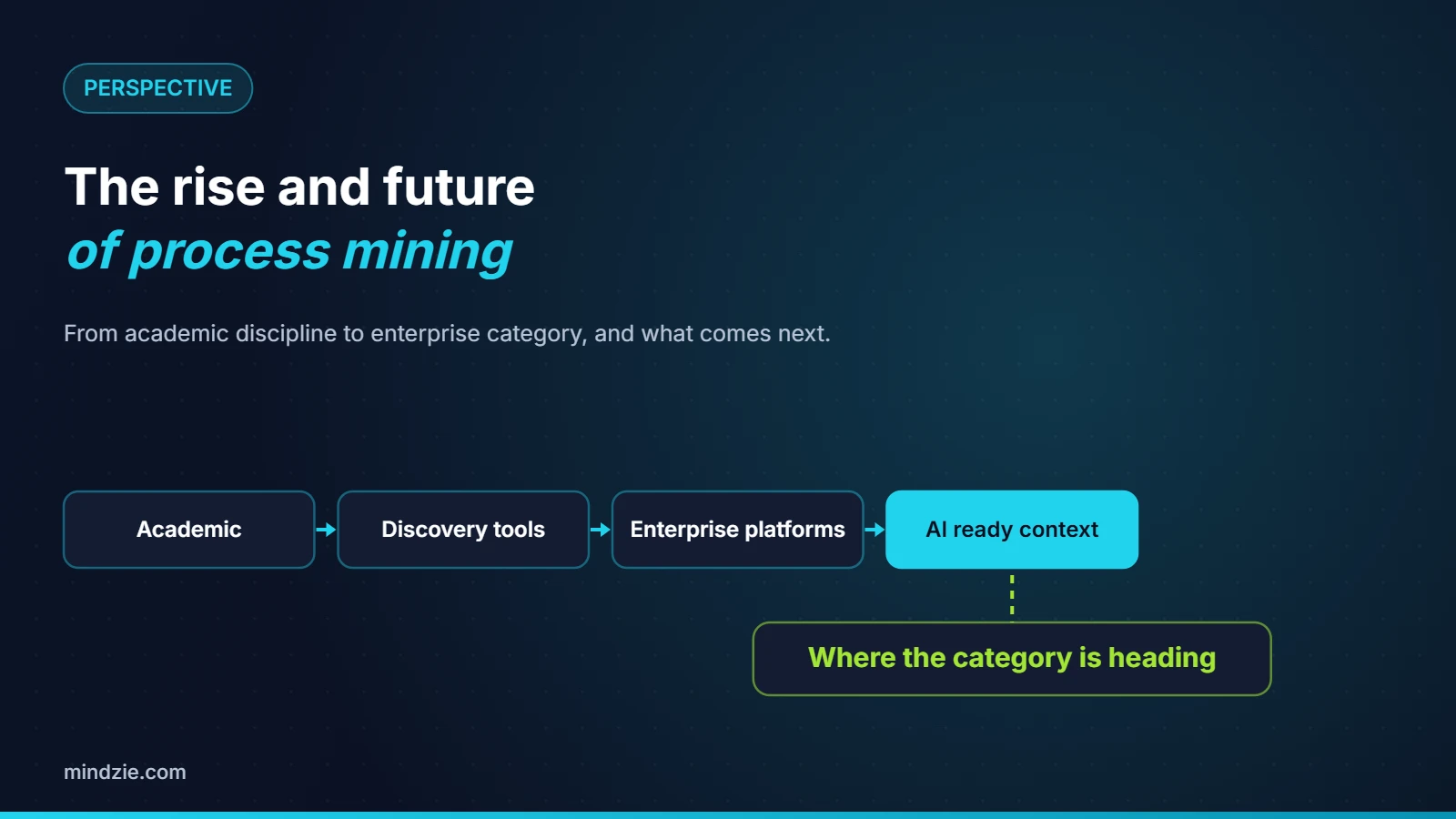
Process mining took two decades to move from academic technique to boardroom priority. A look at how it happened and what comes next.
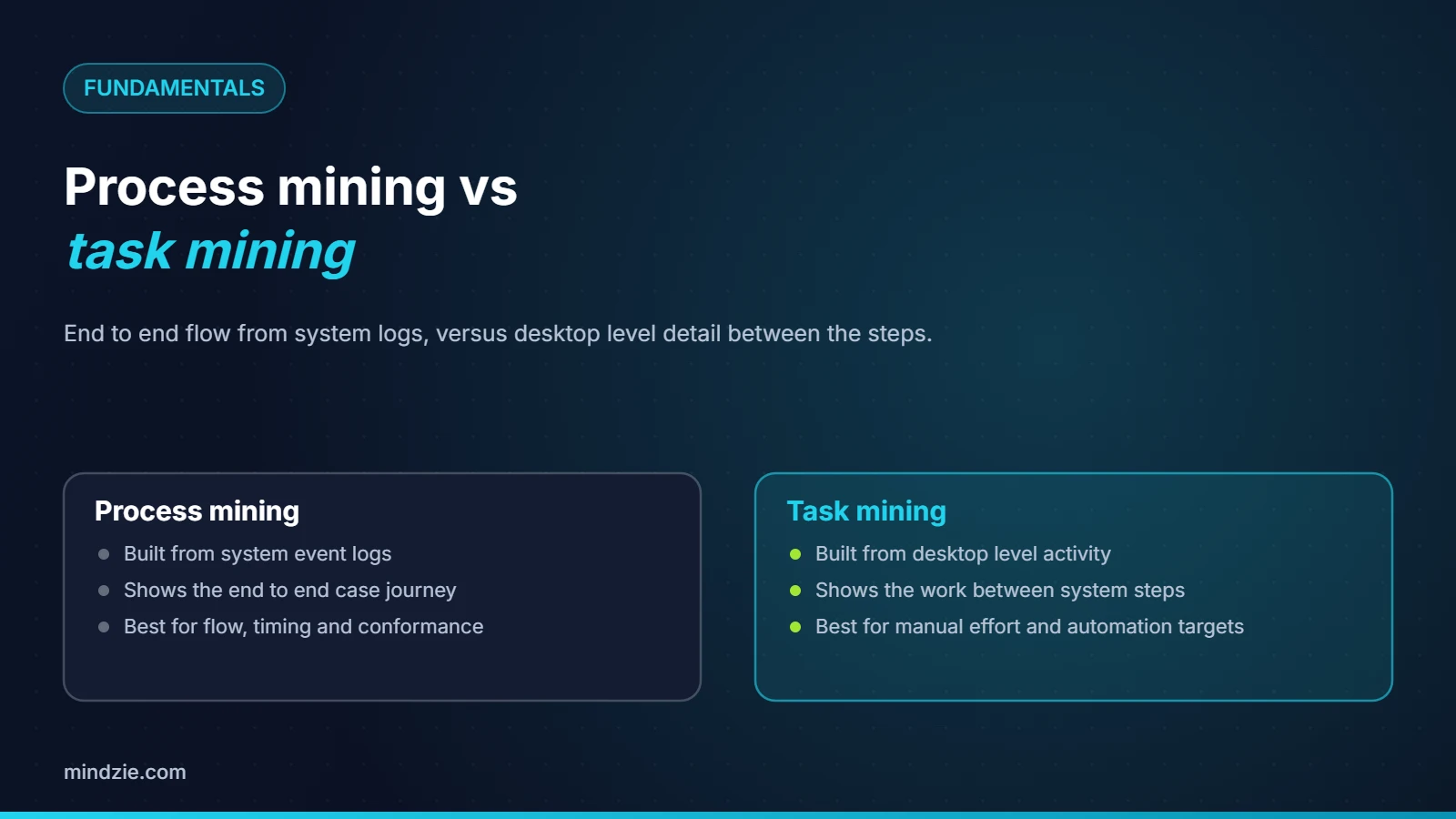
Process mining sees the end to end flow from system data. Task mining sees what happens on the desktop between those steps. Most teams eventually want both.
Much of a process is executed by people, and how they work shapes the outcome. Event data can show that pattern without turning into surveillance.
Process mining is not only for business processes. Here it is applied to Google Borg cluster trace data to find bottlenecks and inform capacity planning.
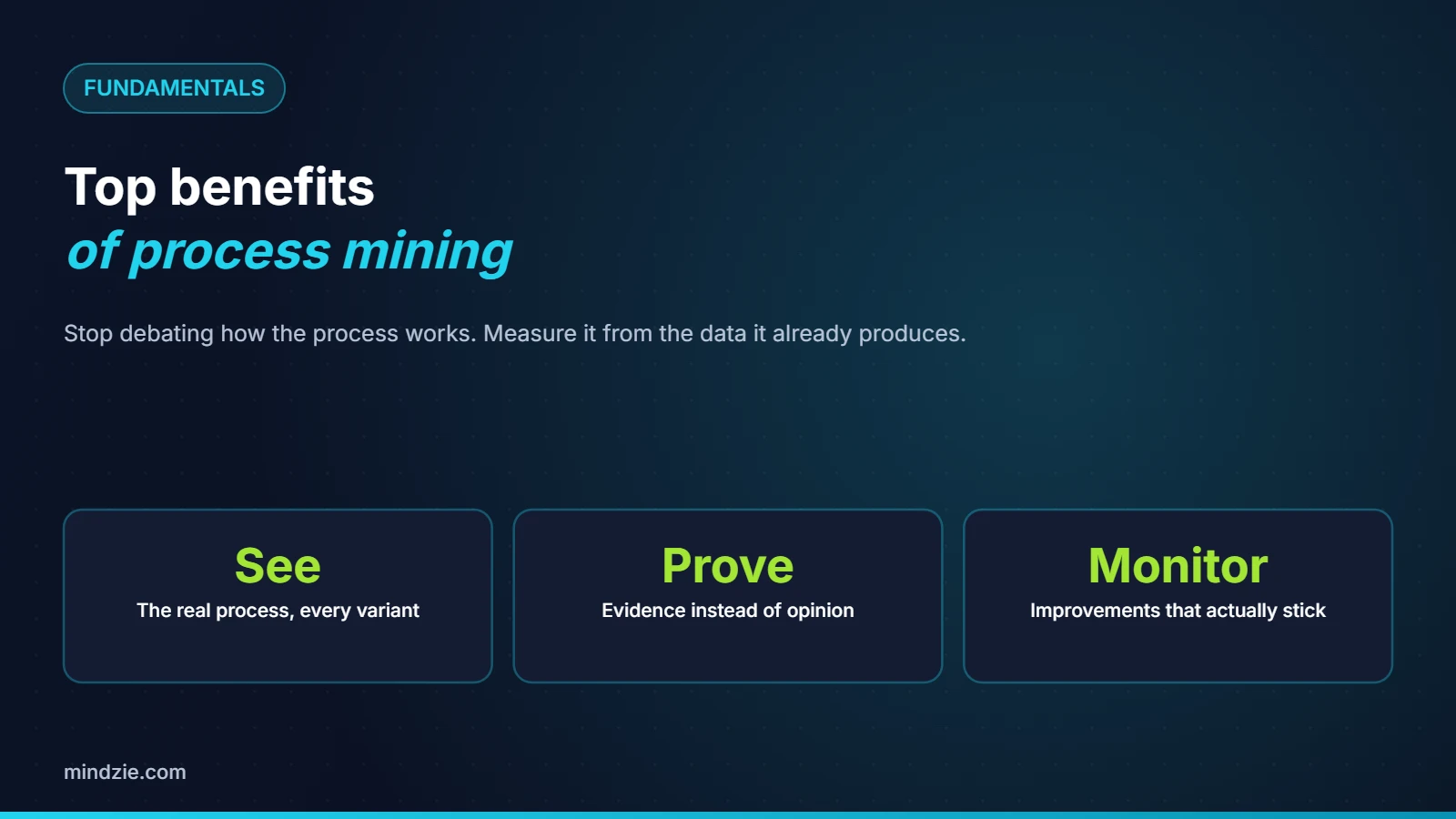
The benefits of process mining come down to one shift: you stop debating how the process works and start measuring it.
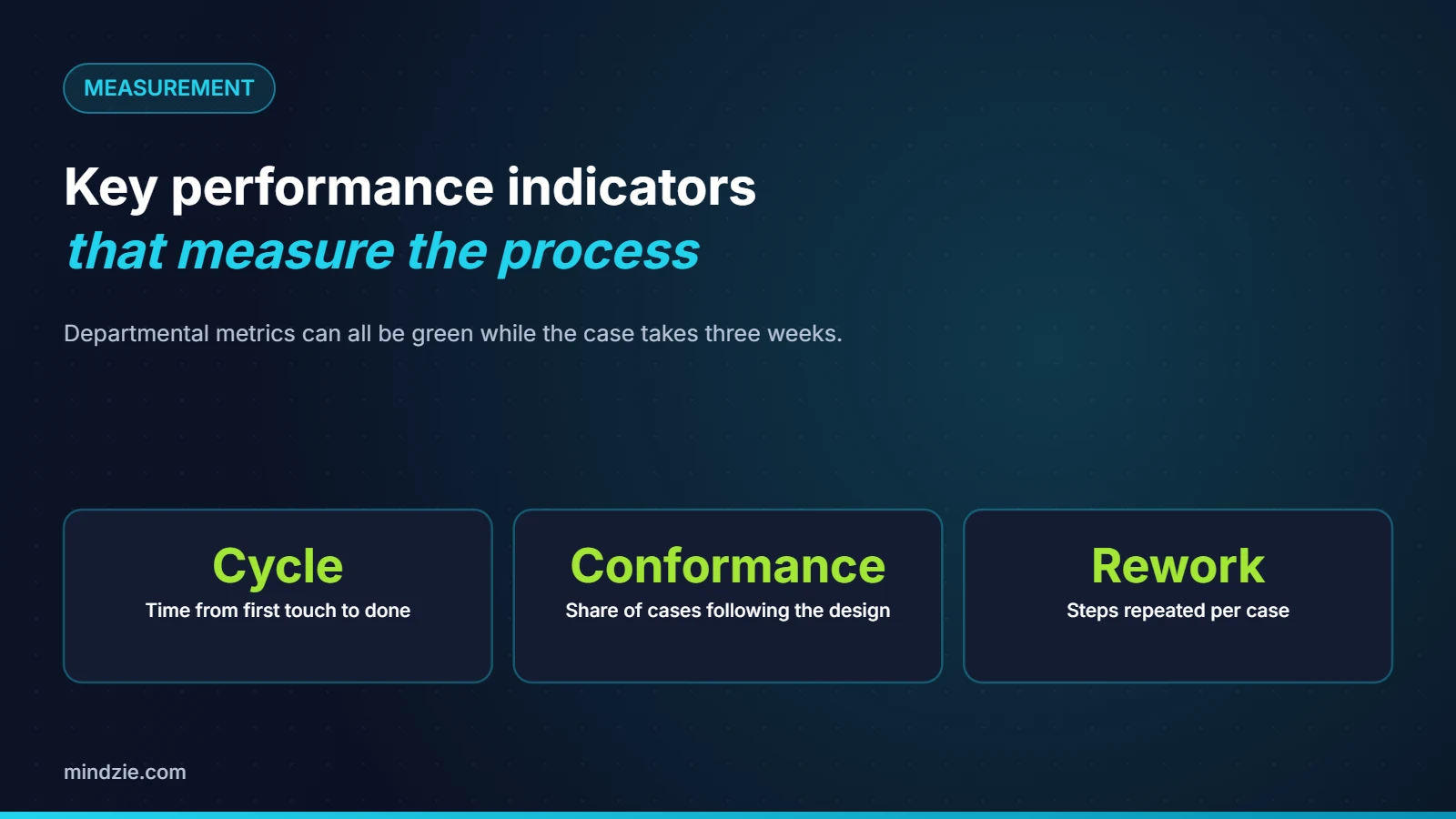
A KPI that measures a department can look healthy while the process it belongs to is failing. Process KPIs measure the journey instead.
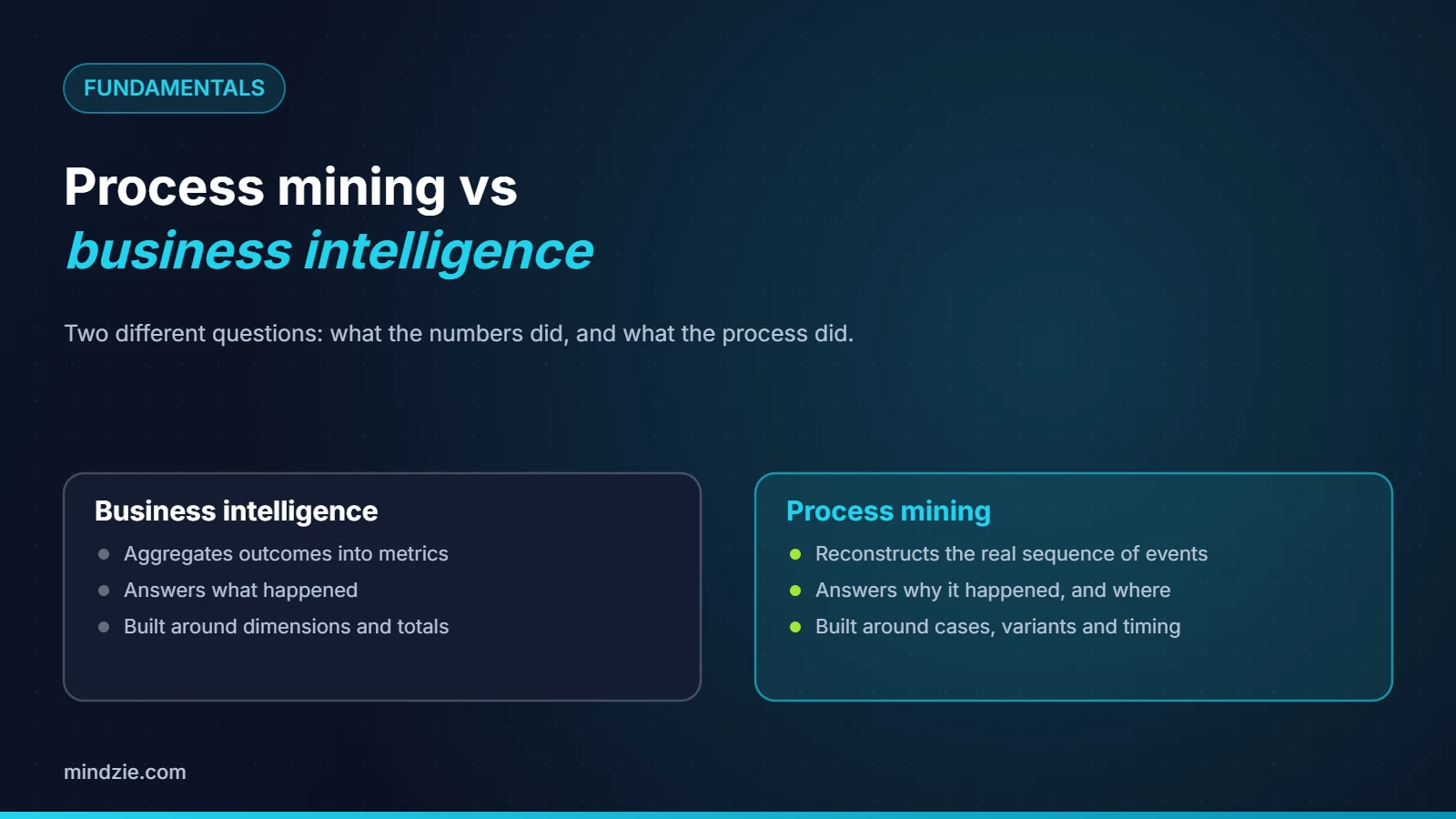
Business intelligence tells you what your numbers did. Process mining tells you what your process did, step by step, and why the numbers came out that way.